
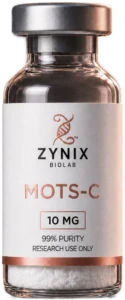
Dosage Chart
Gradual titration schedule for the 10 mg vial over 10 weeks, administered once daily by subcutaneous injection via U-100 insulin syringe. Rotate injection sites (abdomen, thighs, upper arms) systematically. [5]
| Phase | Daily dose | Units (U-100) | Volume |
|---|---|---|---|
| Weeks 1–2 | 200 mcg | 6 u | 0.06 mL |
| Weeks 3–4 | 400 mcg | 12 u | 0.12 mL |
| Weeks 5–6 | 600 mcg | 18 u | 0.18 mL |
| Weeks 7–8 | 800 mcg | 24 u | 0.24 mL |
| Weeks 9–10+ | Up to 1 mg (1,000 mcg) | 30 u | 0.30 mL |
At the 3.33 mg/mL working concentration, 1 unit on a U-100 syringe equals 0.01 mL, approximately 33.3 mcg. [5] Beyond the 10-week titration above, protocols more broadly are reported to typically run 8–12 weeks, with an optional extension to 16 weeks. [5]
Reconstitution
10 mg vial, mixed to a working concentration before drawing a dose.
Add 3.0 mL of bacteriostatic water to the 10 mg vial, yielding a concentration of approximately 3.33 mg/mL. [5] Inject the water slowly along the vial wall to avoid foam formation, then gently swirl until fully dissolved; do not shake vigorously. [5]
Before reconstitution, keep the lyophilized peptide frozen at −20 °C or colder, in dry, dark conditions. Once reconstituted, refrigerate between 2–8 °C, protected from light, and avoid repeated freeze-thaw cycles; let the vial warm to room temperature before opening to reduce condensation. [5] Use the reconstituted solution within 7 days for optimal potency. [5]
How It Works
MOTS-c is a small mitochondrial-derived peptide composed of 16 amino acids, encoded within mitochondrial 12S ribosomal RNA (MT-RNR1). It functions as a cellular signaling molecule involved in metabolic regulation and stress response. [4]
Physical exercise may increase MOTS-c levels, potentially improving metabolic function and insulin sensitivity. [2] In kidney disease patients, MOTS-c has been reported to show an inverse association with the AGEs/sRAGE ratio, suggesting a potential protective role in metabolic complications. [1] In myocardial-infarction animal models, a MOTS-c-conjugated hydrogel has been reported to extend the survival of isolated mitochondria and reduce cardiac damage. [3]
Human research on MOTS-c is early and limited: the safety profile is incomplete, and long-term adverse effects and contraindications remain undefined. No clinical trials showing disease-treatment efficacy are documented in the sources reviewed for this page; available human evidence focuses on observational biomarker measurements rather than intervention trials demonstrating therapeutic benefit. [4] MOTS-c is not FDA-approved: there are no FDA-approved MOTS-c products or labeled indications, and no regulatory pathway to approved drug status is documented. [4] This section describes what the cited literature reports; it is not a claim of safety or effectiveness for human use.
References
[1] AGEs-RAGE Axis and Mitochondrial-Derived Peptides in Advanced Chronic Kidney Disease · PMID 42650220
[2] Mitochondrial-Derived Peptides Activated by Physical Exercise as Therapeutic Targets for Metabolic Disorders · PMID 42640735
[3] Mitochondria-Derived Peptide Hydrogel Augments Mitochondrial Transplantation for Cardiac Repair · PMID 42633281
[4] MOTS-c overview · PeptideDosages
[5] MOTS-c 10 mg vial dosage protocol · PeptideDosages