
Dosage Chart
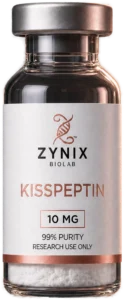
Titration schedule for the 10 mg vial, administered once daily by subcutaneous injection. [5]
| Phase | Daily dose | Units (U-100) | Volume |
|---|---|---|---|
| Weeks 1–2 (start) | 100 mcg | 3 u | 0.03 mL |
| If tolerated, thereafter | 200 mcg | 6 u | 0.06 mL |
Start at 100 mcg daily for 1–2 weeks to assess sensitivity, then increase to 200 mcg daily if tolerated. [5] Reported protocols run 8–12 weeks. [5] Avoid prolonged continuous use: cycle interruption between cycles is recommended to prevent tachyphylaxis (reduced responsiveness over time) and maintain receptor sensitivity. [5]
Reconstitution
10 mg vial, mixed to a working concentration before drawing a dose.
Add 3.0 mL of bacteriostatic water to the 10 mg vial to yield approximately 3.33 mg/mL. [5]
Before reconstitution, store the lyophilized peptide at −20 °C in dry, dark conditions. Once reconstituted, refrigerate at 2–8 °C. [5] The reconstituted solution is reported stable for approximately 4 weeks under proper refrigeration. [5]
How It Works
Kisspeptin refers to a family of peptides encoded by the KISS1 gene; kisspeptin-10 is the shortest biologically active C-terminal fragment and the most commonly studied form in research contexts. [4] It activates GPR54 receptors in the hypothalamus to trigger gonadotropin-releasing hormone (GnRH) secretion, which in turn stimulates luteinizing hormone (LH) and follicle-stimulating hormone (FSH) release from the pituitary gland. [4] Activation of kisspeptin signaling can increase LH secretion in controlled research settings, particularly in assisted-reproduction and reproductive-hormone research. Hormone release is treated as an intermediate endpoint in this research; it does not by itself establish broader therapeutic proof. [4]
A 2026 narrative review notes that peptide-based therapies, including kisspeptin, may support endogenous hormonal signaling through targeted activation of the hypothalamic-pituitary-testicular axis in testosterone-therapy-induced reproductive suppression, though restoration of spermatogenesis remains limited. [1] A separate 2026 clinical observation reported marked hyperkisspeptinemia together with hypothalamic-pituitary-gonadal axis uncoupling in hemodialysis patients, described as clinically suggestive of central neuroendocrine desensitization. [2] A biomarker study found that seminal plasma kisspeptin-1 and kisspeptin-54 levels are associated with semen-quality parameters and oxidative stress in male infertility, and proposed kisspeptin as a candidate biomarker. [3]
Kisspeptin does not have an FDA-approved routine therapeutic indication listed in Drugs@FDA and remains investigational rather than approved for general medical use. [4] This section describes what the cited literature reports; it is not a claim of safety or effectiveness for human use.
References
[1] Emerging Peptide and Neuroendocrine Strategies for TRT-Induced Reproductive Suppression · Narrative review, PMID 42666625
[2] Hyperkisspeptinemia and HPG Axis Uncoupling in Hemodialysis Patients · PMID 42571597
[3] Seminal Plasma Kisspeptin Levels and Semen Parameters in Male Infertility · PMID 42566672
[4] Kisspeptin overview · PeptideDosages
[5] Kisspeptin 10 mg vial dosage protocol · PeptideDosages