
Dosage Chart
Eight-week gradual escalation for the 1 mg vial, once daily by subcutaneous injection. [2]
| Phase | Daily dose | Units (U-100) | Volume |
|---|---|---|---|
| Weeks 1–2 | 20 mcg | 6 u | 0.06 mL |
| Weeks 3–4 | 40 mcg | 12 u | 0.12 mL |
| Weeks 5–8 | 50 mcg | 15 u | 0.15 mL |
Independently verified: at 0.333 mg/mL (333 mcg/mL), 1 unit is approximately 3.33 mcg, so 20/40/50 mcg divide out to 6.01/12.01/15.02 units, rounding cleanly to the 6/12/15 units the source gives. [2] The source specifies this 8-week protocol but does not state whether to extend, rest, or restart beyond week 8; that continuation decision is not sourced here.
Reconstitution
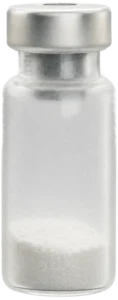
1 mg vial, mixed to a working concentration before drawing a dose. This is a small-mass vial, so the resulting concentration is lower than the 3.33 mg/mL seen on 10 mg vials.
Add 3.0 mL of bacteriostatic water to the 1 mg vial to yield a concentration of approximately 0.333 mg/mL (333 mcg/mL): 1,000 mcg ÷ 3 mL = 333.3 mcg/mL, confirmed against the source's own stated math. [2]
Store the lyophilized vial at −20 °C for up to 12 months. Once reconstituted, refrigerate at 2–8 °C and use within 30 days. Frozen aliquots remain stable for 3–6 months at −20 °C, with the critical caveat that a thawed vial should never be refrozen (single thaw-refreeze cycle maximum). [2]
How It Works
IGF-1 LR3 (Long R3 IGF-I) is an 83-amino-acid synthetic analog of insulin-like growth factor-1, structurally modified to reduce affinity for IGF-binding proteins (IGFBPs), which extends its circulating exposure compared to native IGF-1. [1] It activates the IGF-1 receptor (IGF-1R), triggering intracellular PI3K-Akt and MAPK/ERK signaling pathways that drive protein synthesis, cell growth, and tissue remodeling. [1]
Published human pharmacokinetic data for IGF-1 LR3 remain limited: half-life claims circulate online, but no rigorous clinical pharmacokinetic study documents the actual plasma half-life in human subjects, and no published human clinical trials or safety studies specific to IGF-1 LR3 exist in the accessible peer-reviewed literature reviewed for this page. All safety data here are derived from preclinical models and theoretical extrapolation from native IGF-1 biology. [1]
IGF-1 LR3 is not FDA-approved as a medicine for any indication and has no approved therapeutic label, dosing instructions, or defined clinical safety profile. [1] The only FDA-approved IGF-1 therapy is mecasermin (Increlex), used for growth hormone insensitivity syndrome at a dose of 0.04–0.08 mg/kg twice daily subcutaneously; mecasermin is a different molecule, and its dosing is not interchangeable with IGF-1 LR3 protocols. [1] Beyond hypoglycemia, the source notes theoretical, unsourced concerns around tumor-promotion risk (given IGF-1 signaling's role in cell proliferation) and antibody formation against the synthetic peptide with repeated dosing; neither is backed by human data reviewed here. This section describes what the cited literature reports; it is not a claim of safety or effectiveness for human use.
References
[1] IGF-1 LR3 overview · PeptideDosages
[2] IGF-1 LR3 1 mg vial dosage protocol · PeptideDosages