
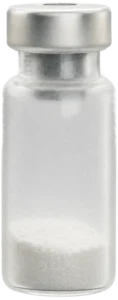
DAC: Dosage Chart + No-DAC: Dosage Chart
DAC: Dosage Chart
Twice-weekly subcutaneous injection for the 5 mg DAC vial, spaced 3–4 days apart (e.g. Monday/Thursday). [2]
| Phase | Dose per injection | Units (U-100) | Volume |
|---|---|---|---|
| Weeks 1–2 | 300 mcg | 12 u | 0.12 mL |
| Weeks 3–4 | 500 mcg | 20 u | 0.20 mL |
| Weeks 5–6 | 750 mcg | 30 u | 0.30 mL |
| Weeks 7–12 | 1,000 mcg | 40 u | 0.40 mL |
Weekly total roughly doubles the per-injection dose (e.g. 600 mcg/week at weeks 1–2, up to 2,000 mcg/week at weeks 7–12). Recommended protocol length is 8–12 weeks, with an optional extension to 16 weeks. [2]
No-DAC: Dosage Chart
Once-daily subcutaneous injection for the 5 mg No-DAC vial, typically at bedtime, on an empty stomach. [4]
| Phase | Daily dose | Units (U-100) | Volume |
|---|---|---|---|
| Weeks 1–2 | 100 mcg | 6 u | 0.06 mL |
| Weeks 3–4 | 150 mcg | 9 u | 0.09 mL |
| Weeks 5–6 | 200 mcg | 12 u | 0.12 mL |
| Weeks 7–12 | 250–300 mcg | 15–18 u | 0.15–0.18 mL |
Rotate injection sites (abdomen, thighs, upper arms). Standard protocols span 8–12 weeks, with an optional extension to 16 weeks. [4]
DAC: Reconstitution + No-DAC: Reconstitution
DAC: Reconstitution
Add 2.0 mL of bacteriostatic water to the 5 mg DAC vial to yield a concentration of 2.5 mg/mL (2,500 mcg/mL); at this concentration, 1 unit on a U-100 syringe equals 25 mcg. [2]
Store the lyophilized vial at −20 °C in dry, dark conditions. Once reconstituted, refrigerate at 2–8 °C; stable for 2–4 weeks. Avoid repeated freeze-thaw cycles. [2]
No-DAC: Reconstitution
Add 3.0 mL of bacteriostatic water to the 5 mg No-DAC vial to yield a concentration of approximately 1.67 mg/mL; at this concentration, 1 unit on a U-100 syringe is approximately 16.7 mcg. This is a different vial, volume, and concentration from the DAC variant above; do not mix the two protocols. [4]
Store the lyophilized vial at 2–8 °C, or freeze at ≤−20 °C for extended storage. Once reconstituted, refrigerate and use within 1–2 weeks (shorter than the DAC variant's 2–4 weeks); avoid repeated freeze-thaw cycles. [4]
How It Works
Both variants are synthetic growth hormone-releasing hormone (GHRH) analogs that activate the GHRH receptor pathway in the anterior pituitary, mimicking endogenous GHRH signaling to stimulate growth hormone secretion; IGF-1 levels rise downstream of elevated GH. [1][3]
DAC is modified with a Drug Affinity Complex that binds serum albumin, extending circulation far beyond unmodified GHRH. Human data report a half-life of approximately 5.8 to 8.1 days, with growth hormone elevation persisting at least 6 days and IGF-1 increases lasting 9–11 days after a single injection. [1] CJC-1295 DAC is not FDA-approved for any indication and is listed under WADA restrictions as prohibited in athletic competition. [1]
No-DAC (chemically identical to tetra-substituted GRF 1-29, also called Modified GRF) lacks the DAC modification and cannot extend duration through albumin binding. No published human pharmacokinetic data exist for No-DAC specifically; the DAC half-life above does not apply to it. [3] CJC-1295 No-DAC is not FDA-approved for any indication. The FDA lists compounded CJC-1295 among substances presenting significant risks, citing immunogenicity, peptide-related impurities, and increased heart rate with systemic vasodilatory reactions. [3]
For both variants, human evidence remains limited to biomarker changes (GH and IGF-1 elevation) in healthy volunteers; no published efficacy trials in diagnosed disease populations exist for either form. [1][3] This section describes what the cited literature reports; it is not a claim of safety or effectiveness for human use.
References
[1] CJC-1295 DAC overview · PeptideDosages
[2] CJC-1295 DAC 5 mg vial dosage protocol · PeptideDosages
[3] CJC-1295 No-DAC overview · PeptideDosages
[4] CJC-1295 No-DAC 5 mg vial dosage protocol · PeptideDosages